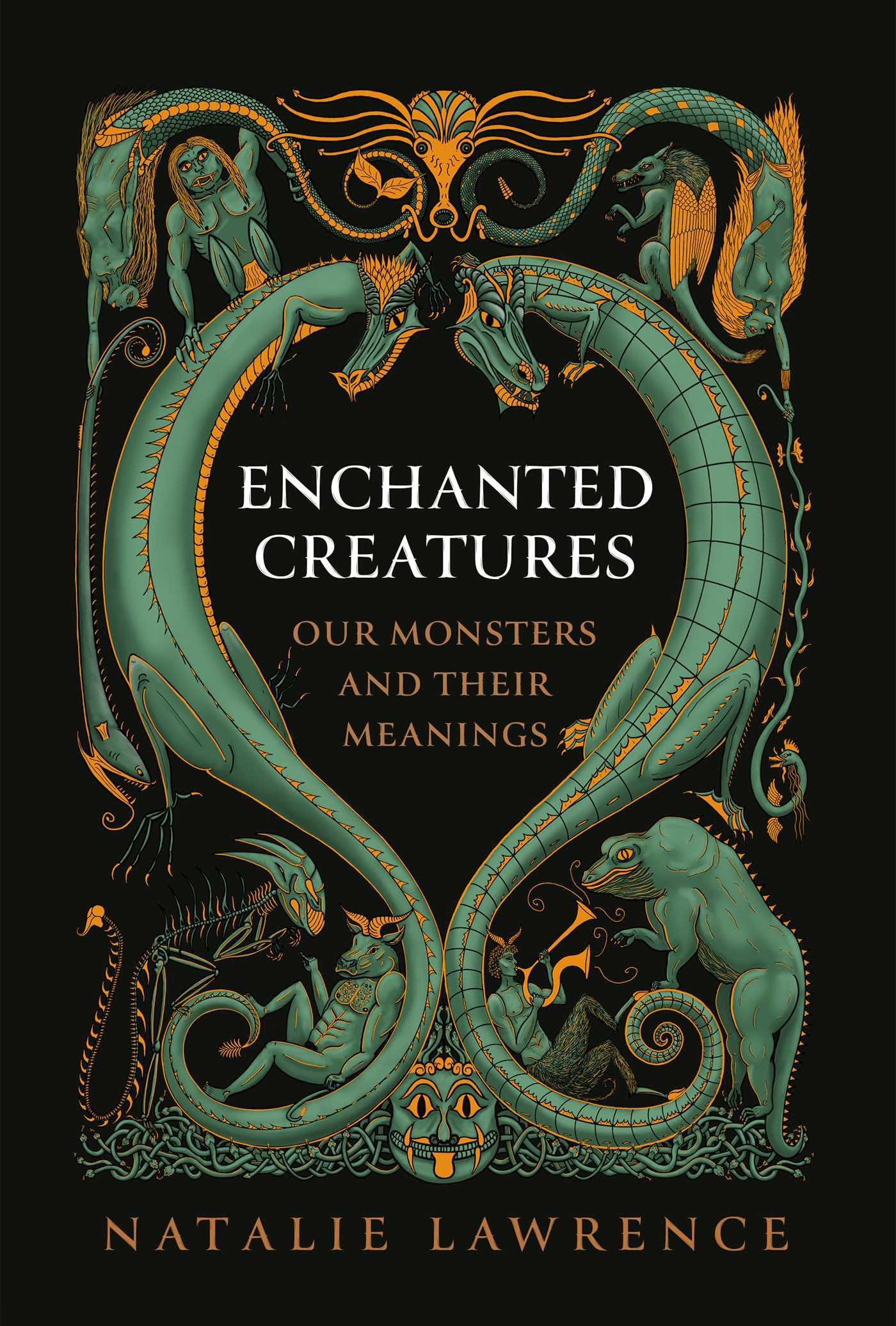
Enchanted Creatures?
Or, monsters - apparently.

Welcome to a couple of new subscribers this week! At the moment, I’m somewhere between saying nothing here because of a December house move and loads of other life stuff, and at last beginning to read books in my lunch hour at the day-job, which means new book reviews, not reprints of (ahem) old stuff. I choose the books I read pretty carefully these days, so most of my reviews are positive. Not so for today’s review, alas.
Natalie Lawrence’s Enchanted Creatures is subtitled: Our Monsters And Their Meanings. It’s a trawl through the human history of creating monsters, from Palaeolithic cave paintings, through Mesopotamian sea serpents, the Minotaur, Grendel and dragons all the way to Godzilla. It’s pleasantly chatty in tone, and all the right names are there in the right place, but…
I found this book pretty hard to digest, mostly because it depends for its argument on the notion of human beings as animals with a civilised veneer, which to my mind is rather an outdated metaphor – though one men love referring to because it’s a good excuse for their objectionable behaviour. Elsewhere, the author speaks of irrationality at the dark heart of the human condition, and other striking but not terribly enlightening metaphors. Yes, doubtless we do exhibit some irrationality – human nature. But is that everything? Is it even the major part of life, really?
This is not a bad book, but it is pretty hard to take seriously. As I reached its middle point and my doubts began to surface, I checked out the book’s reviews on amazon, to discover a clutch of breathless 5* reviews, and one 1*. That 1* review echoed my own thoughts – that this book reads like an inexpertly expanded PhD thesis. There’s an air of the author making the story fit her own personal narrative. Lawrence is an expert on Medieval monsters and people’s attitudes towards them. There, without doubt, she is a world-class researcher. But to extend her basic idea, that monsters are inside us all the time, is in my opinion a step too far. It’s the nature versus nurture debate again. Many people, men especially, like the nature option because understanding complex social forces is difficult – much easier to say, oh, yes, we’re all animals really, that explains things. I prefer the other option, that in fact we are highly socialised, compassion and empathy-seeking individuals transformed to our disadvantage by societies created for small groups of elite individuals – those at the tops of hierarchies for instance.
To repeat: I don’t think this is a bad book. There are lots of interesting anecdotes, stories, and plenty of facts. But I think those parts of the book have been stitched into a pretty ropy costume, one that might fall apart at the next breeze.