Winterview
Or, hello 2026.

Greetings to a few more people who have subscribed to this Substack. Welcome!
It has been rather quiet here lately because of events in my personal life, most of which revolved around moving house. My other half and I moved on 9th December, so we’ve been in now for almost two months. To be honest, although we are over the exhaustion phase, we’re still in the completely-knackered-after-walking-up-a-few-flights-of-stairs phase, and we’re not expecting to be back to normal until about Easter. We both have part time day-jobs, which we are back to, so there’s all the usual stuff for me like avoiding potholes on the A44 in fog and pitch darkness at 7:20 in the morning to contend with. Still, half term is nearly upon us.
However… fear not, dear readers. I am alive and kicking. At some point I shall begin popping in a few novelties amongst the reprints of old book reviews and other tat that I am presenting here.
I have begun writing a new book again. In May I have to deliver my next music work, Genesis: Album By Album, so that is what I started writing a couple of weeks ago. I suppose there isn’t much crossover between that and Consciousness & The Human Condition, but, then again, if we’re talking music – especially melody – we’re talking human condition.
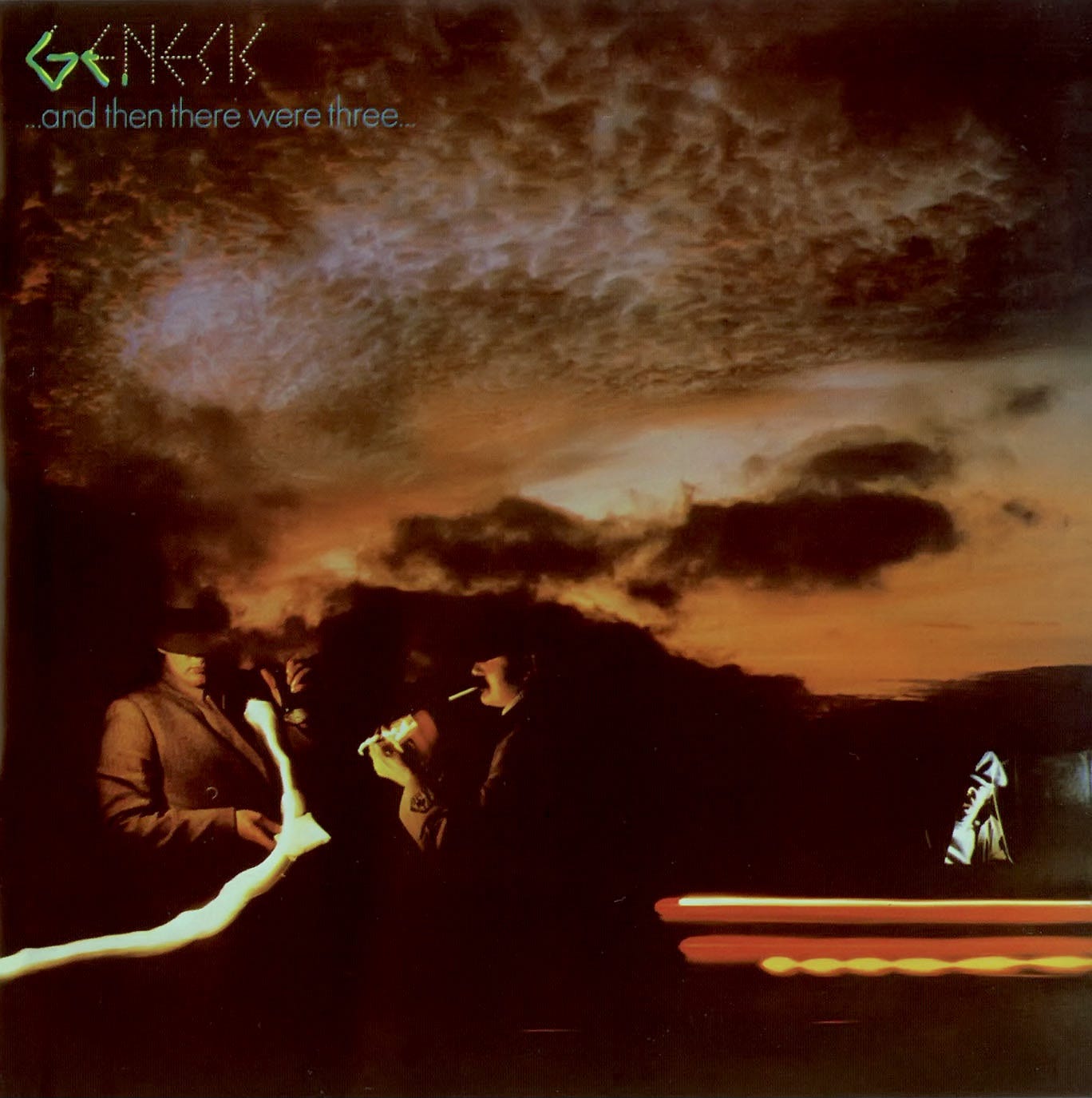
So here’s a novelty. This is the first draft of my introduction to the 1978 album … And Then There Were Three…
Struggling mythic heroes in imaginary landscapes – that was what the first three post-Gabriel albums presented listeners, but the theme applied in particular to … And Then There Were Three…
Storytelling is a human art, but there are certain rules that it follows. Above all, storytelling is about us: human beings. We find others of our kind endlessly fascinating, as any staff room gossip shows, let alone tales, novels, legends. Our most significant stories tend to focus on flaws in character, especially flaws that the individual in question cannot see themselves. Such quirks of character are flaws in name as well as actuality, as we are all the products of our parenting and our wider family and kin. Philip Larkin put it especially well: They fuck you up, your mum and dad, They may not mean to, but they do. They fill you with the faults they had, And add some extra, just for you. So a good mythic hero struggles with themselves as well as with circumstances. How they manage is the gist of the story; the point of the myth.
But what is a myth? We use the word these days to mean something that is not true, but the proper meaning of the word is the exact opposite. A myth is a framework for humanity – a profound truth. Our word and technique-obsessed world is one of facts and literal truth, but for most of our past human beings have not needed to be so precise. A true myth as our forebears understood it was something which may have happened once, but which now can be used to illustrate and teach something more general. A true myth is a resource, a guide, an exemplar. Myths of the distant past spoke of extreme human experiences like overcoming great fear, or even death itself. They were frameworks of explanation too: the origin of the universe for example. Above all, they were stories that spoke of the labours of flawed individuals who had the strength, insight, fortune or opportunity to show the world what being human could be.
A mythic hero struggling in a world of peril is somebody who leads by example. All the great heroes of the past do this. The very first mythic hero of the historical period, Gilgamesh, was a tyrant whose people in the Sumerian city of Uruk complained about his appalling behaviour to the gods themselves. Gilgamesh, two thirds divine one third human, had to come to terms with the new urban mode of living, and had to travel to the land of the dead. The themes of this myth are familiar to us today: identity, relationships between people (Gilgamesh had to realise that he has been a tyrant), and dealing with mortality. Gilgamesh’s journey was one of self-understanding as much as anything else, in which his youthful arrogance turned into a more meaningful, less abrasive legacy for him and the inhabitants of Uruk.
We find flawed characters lurking in this Genesis album. Throughout it – the last of the 1970s and the final work of the classic era – a number of characters have their stories told. The places they live in are just as vivid and original as those of the previous two albums, and their tales are just as compelling. I think of this album as the third in a lush, dense trilogy, no lesser a work for the absence of Steve Hackett, and connected to the previous two albums through keyboards sounds, themes, Collins’ confident vocals, and the magisterial playing of the three musicians.